Most of the flats we live in today do not have large, spacious living rooms. The living room is often also the dining room, a work nook and the place where children spend the afternoon. In a space like that, every piece of furniture has to earn its place - and the largest, most important one is the sofa.
The good news is that a small space does not ask for a small sofa. It asks for a smart sofa. In this article we walk through the mistakes we see most often, the configurations that actually work, and why modular furniture is the solution that adapts to you, instead of limiting you.
The Most Common Mistake: Buying Smaller, Not Smarter
When space is limited, the first instinct is to look for the smallest two-seater possible. The result is usually a room that looks stingy rather than comfortable, and a family squeezed onto two seats while the rest of the room sits empty.
The problem with a small living room is rarely the square metres. The problem is the layout. A classic three-seater plus two armchairs plus a coffee table takes up a huge amount of floor and creates a “forest of legs” that is hard to move through. One well-placed modular sofa can replace all three pieces and leave more free space than before.
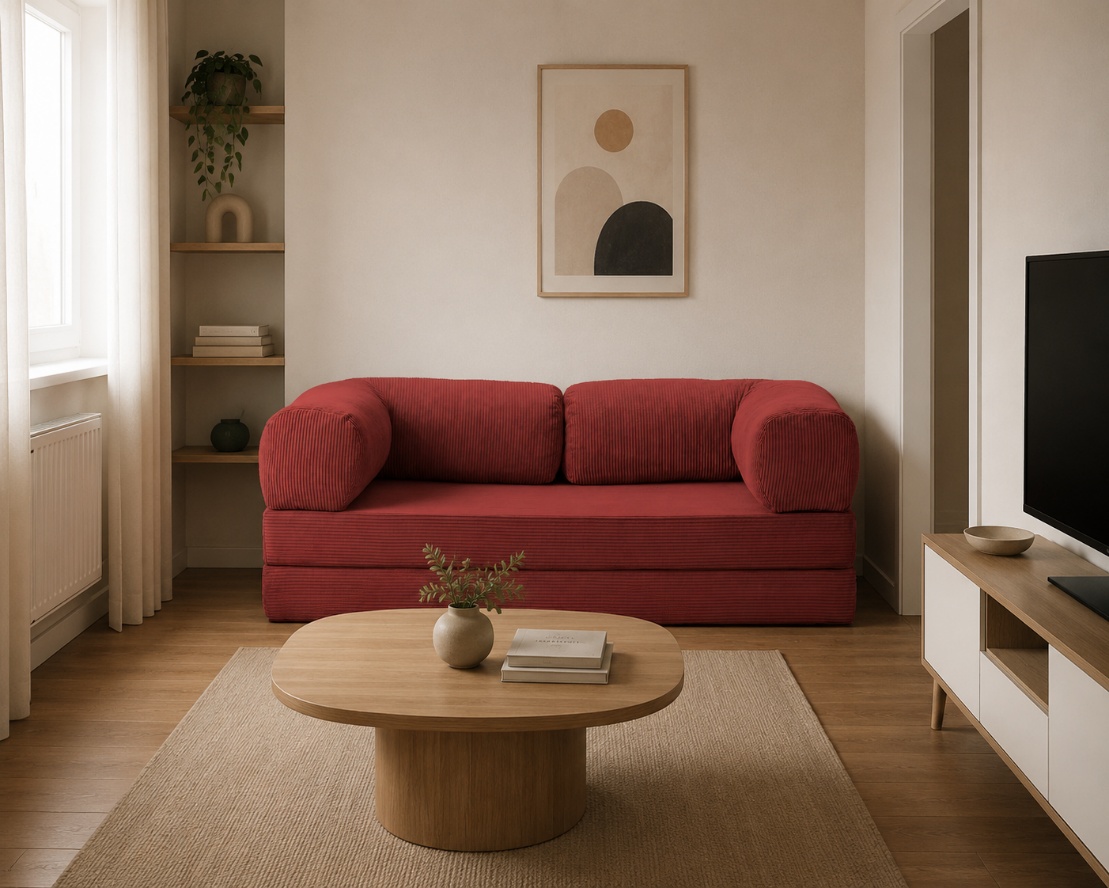
Why a Modular Sofa Wins in a Small Space
A modular sofa is not one fixed shape. It is a set of elements you arrange around your room, not the other way around. For a small living room that brings several concrete advantages.
You start with what you need today. Two or three modules are enough for a smaller flat. When you move or expand the space, you add elements instead of buying a new sofa.
A corner layout saves floor. An L-shaped setup uses the corner of the room, which is otherwise dead space, and gives the same or more seating than a three-seater with an armchair, on a smaller footprint.
A separate module as extra seating. One CLOUD element, or a CLOUD Chair, can stand apart when guests arrive and return to the set when you are not home. There is no need for an extra armchair that permanently occupies the room.
A lower line, more air. The CLOUD Sofa has a low, relaxed silhouette without high backs and heavy arms. In a small space that is essential, because the eye travels freely over the sofa and the room feels more open.
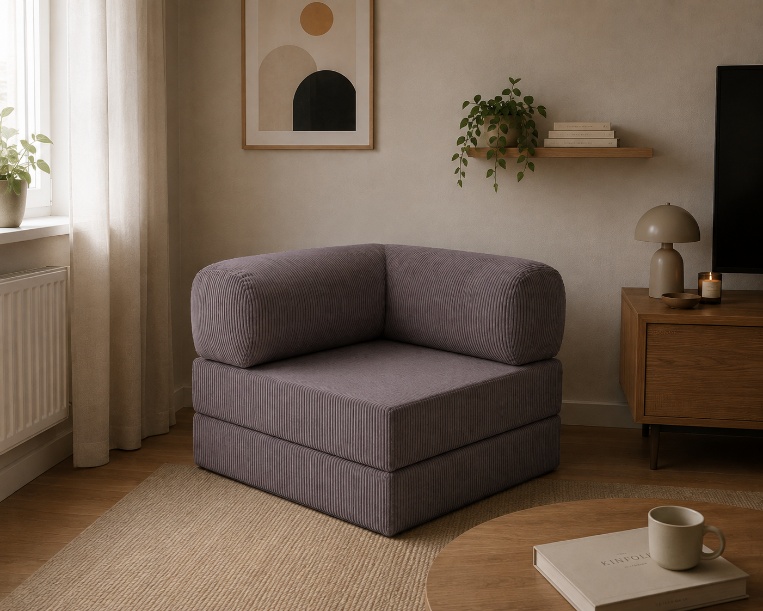
Three Configurations That Work in a Small Living Room
A straight line along the longer wall. The simplest solution for narrow, elongated rooms. Two to three modules against the wall, a slim low table in front and nothing else. Leave at least 70 to 80 centimetres of walkway on the side that leads to the balcony or kitchen.
A compact corner setup. For square rooms or spaces where the living room leans into the dining area. The sofa corner facing into the room naturally separates the rest zone from the dining zone, without a partition wall or a bookcase.
A “floating” sofa. It sounds counterintuitive, but pulling the sofa 20 to 30 centimetres off the wall can give some rooms a greater sense of depth, especially if you leave a walkway or a slim console behind it. Interior designers often warn that pushing everything against the walls actually flattens the room and takes away the sense of flow. Try it - the difference is often surprising.
Colour and Fabric: How a Sofa Can Visually Enlarge the Room
The rule is simple. Lighter, warm-neutral shades such as beige, sand or light grey reflect light and make the sofa feel visually lighter. If you have a small living room with plenty of natural light, you can also allow yourself a deeper colour such as olive or burgundy - but then keep the walls and rug light so the sofa remains the only strong accent.
The cord fabric we use on the CLOUD collection has another advantage in a small space. Fine texture adds depth and warmth even in a neutral colour, so the sofa does not look flat and dull when it is the only large piece in the room. And when it is time for a change, a replaceable cover changes the look of the whole room without a new sofa.
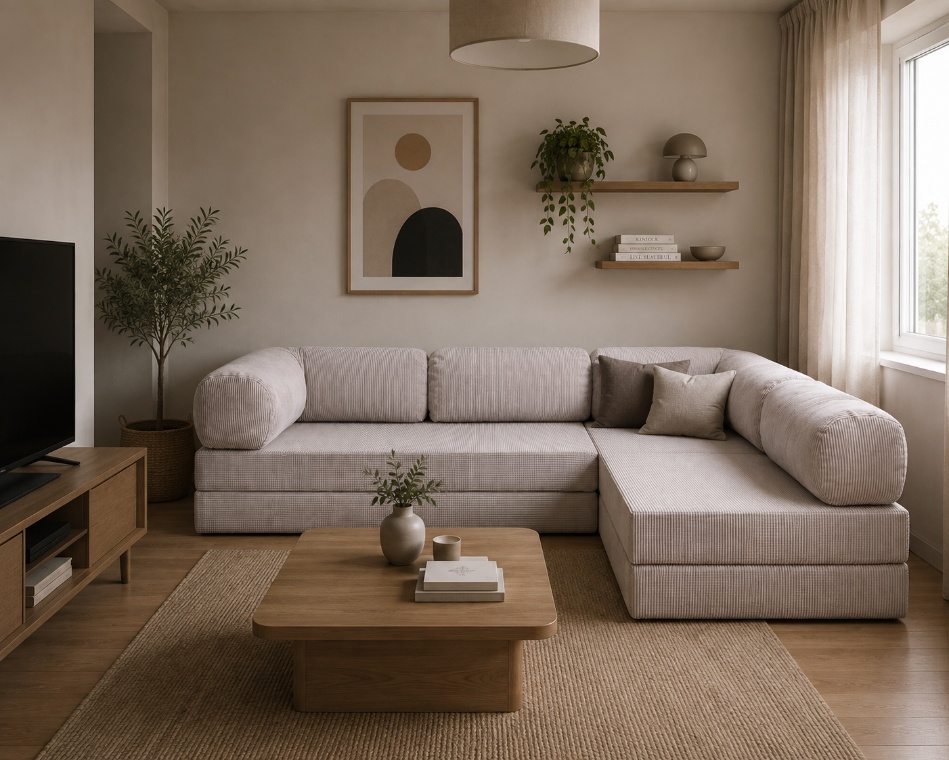
What to Keep, What to Leave Out
Once the sofa is in place, the rest of the room needs to breathe. A few rules that rarely fail:
Choose one low table, preferably round or oval, because it is easier to move around. Instead of a bulky TV unit, consider a wall mount and a slim shelf. Hang curtains as close to the ceiling as possible to lift the room visually. The rug should be large enough for the front legs of the sofa to sit on it, otherwise the room feels chopped up. And do not forget a mirror opposite the window - one of the oldest and most effective tricks for a small living room.
Conclusion
A small living room is not an obstacle. It is a space that rewards good decisions and punishes bad ones. A modular sofa is the best decision you can make, because it grows, changes and moves with you - and already today it gives you more comfort on a smaller footprint than any classic setup.
If you are not sure which configuration fits your space, send us the room dimensions and we will help you put together a CLOUD Sofa that sits exactly where it should. And if you are still choosing your first piece, also read our guide on how to choose the perfect sofa for the living room.